
Digital hearing aids offer several key advantages over traditional analog models. Firstly, they provide superior sound quality through advanced signal processing, resulting in clearer and more natural sound reproduction. Secondly, digital hearing aids offer greater flexibility and customization, allowing for precise adjustments to match individual hearing needs and preferences. Additionally, they often feature automatic programming and adaptive noise reduction capabilities, enhancing speech clarity in various listening environments. Furthermore, digital hearing aids typically integrate seamlessly with modern technology, enabling wireless connectivity to smartphones, TVs, and other devices for convenient streaming and control. Lastly, their sleek and discreet designs prioritize wearer comfort and aesthetics, making them a preferred choice for those seeking effective and inconspicuous hearing solutions.
One style doesn’t always fit all, in fact very rarely is this the case. At Cotswold hearing we strive to ensure you benefit from the best hearing aid that is suitable for your type of hearing loss and degree of need. We work with all the leading manufacturers to offer virtually all styles of hearing aids available on the market today.
Generally there are two main types/style that are worn… On the ear or OTE/RIC and In the ear/completely in canal or ITC/CIC/IIC. Depending on your type and degree of hearing loss, along with other aspects such as anatomy and physiology – the particular style of hearing aid that is best suited for your needs may vary from one person to another.
During our hearing assessments we will discuss your needs and preferences and then consult and guide you as to which styles you may benefit from, however below is an over view of the main styles that are available and some of their benefits and potential restrictions.
OTE/RIC (On the Ear/ Receiver in Canal) hearing aids.
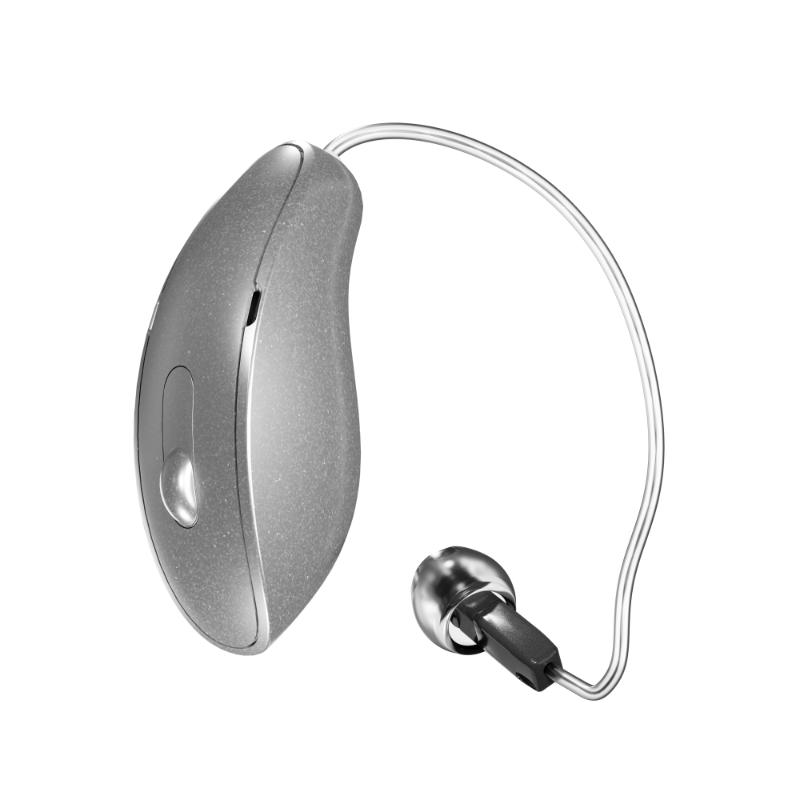
Theses are the most commonly worn hearing aids, around 75% of privately dispensed hearing aids in the uk are OTE/RIC styles. They offer unrivalled comfort and sound quality, giving the wearer the most natural sound and greatest comfort as very little actually sits in the canal, meaning the physical acclimatisation process is relatively short (no more than a week generally). It also means that it is the least intrusive due to the fact that it keeps the ear canal open. They also benefit from being very small so incredibly discrete improving the overall aesthetic outcome, which to a number of wearers is very important. These hearing aids come with the option of being rechargeable or disposibale battery operated and almost all are Bluetooth compatible in some way.
IIC/CIC (Invisible in Canal/ Completely in Canal) hearing aids.
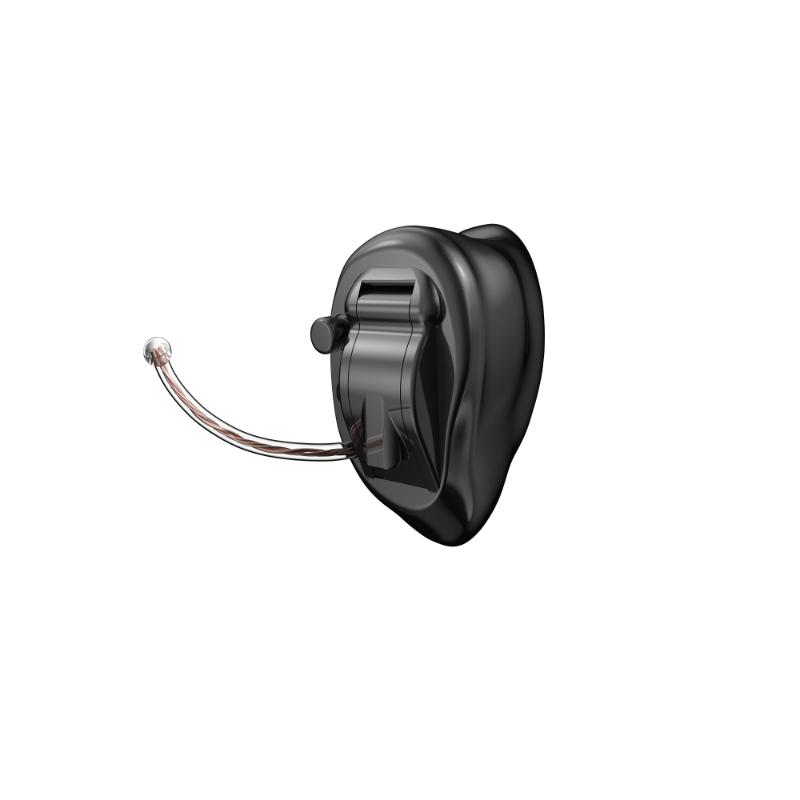
These are in the ear versions and the most commonly worn custom made type of hearing aid. They are incredibly discrete and given that they are now made using lasers and 3d printers/scanners are almost always a great fit first time. They do however fill the ear canal so relative to an OTE/RIC hearing aid they do take a little longer to acclimatise to, generally within a period of 4-6 weeks as getting used to how your voice sounds can take a little time. They do also fill the ear so the sound quality is not quite as natural. Generally they are battery operated and the batteries last between 4-7 days depending on manufacturer and degree of hearing loss. These hearing aids generally are not wireless and do not have a direct Bluetooth compatibility but some can be conncected to a remote control to provide discrete access to manual adjustments such as a volume control. They will not have the option of being loop compatible due to the size constraints with them being so small.
BTE (Behind the ear) hearing aids.
These hearing aids tend to be the most robust and powerful among all hearing aids. Due to the nature of the design all of the components are housed in a unit that sits behind the ear which is attached to a mould that sits in the ear. With technology being where it is today these hearing aids tend to be used by wearers who have a severe to profound degree of hearing loss, or wearers who have poor dexterity as the tend to be large enough for the majority of people to handle. They also generally benefit from Bluetooth compatibility and some manufacturers offer a rechargeable option – however given their size batteries tend to last between 10 days and 3 weeks depending on size. They also do not require the same degree of maintenance so tend to be the least interactive from a logistical perspective, only really requiring the tubing to be replaced on the mold every 6 months or so.

ITC/FS (In the Canal/ Full Shell) hearing aids.

These hearing aids are larger versions of in the ear hearing aids, being more powerful and larger they lend themselves to more severe losses and also wearers who may wish to benefit from rechargeable in the ear hearing aids or wearers who struggle with their dexterity, providing them with something more substantial to take hold of. There are many manufacturers that now offer Bluetooth compatibility within these styles. Given that they are larger they do take a little getting used to (even more so than the IIC/CIC styles) but for the right person can provide real benefits due to there relative ease of use and durability (compared to IIC/CIC styles).
CROS/BICROS (Contralateral routing of signal/ Bilateral Contralateral routing of signal) hearing aids.
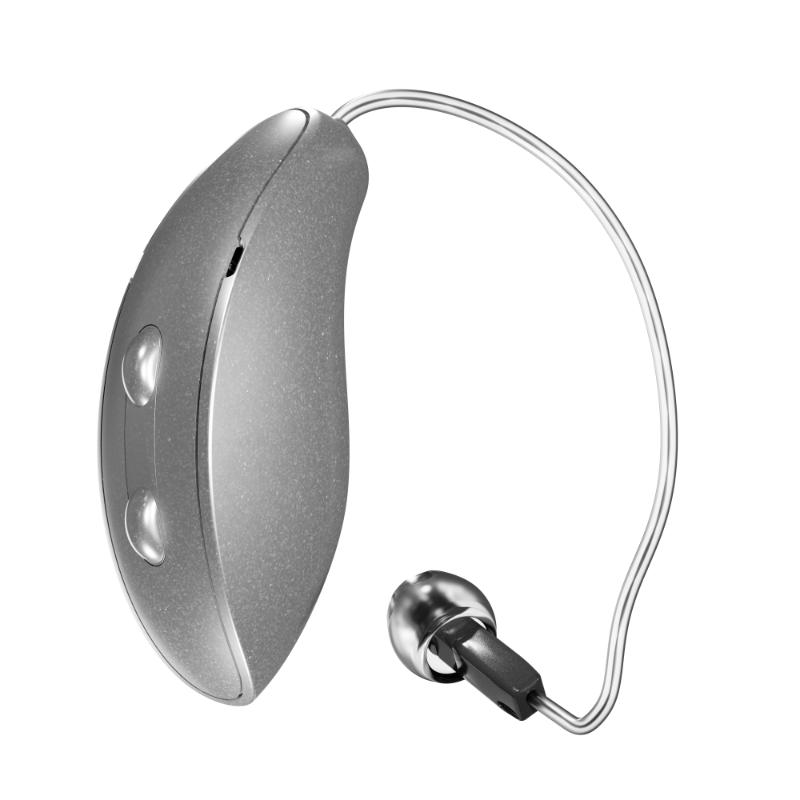
These hearing aids are designed to help people who have a unilateral or single sided hearing loss. Depending on the nature of the better ear one set up may be appropriate over the other but your hearing professional will be able to decide which is best suited depending on your hearing levels. They can be rechargeable or disposable battery operated and again are generally compatible with Bluetooth devices depending on the manufacturers spec. They are only available in a OTE/RIC style (not ITE/CIC).